I have decided to do something new on Fridays. Rather than posting a recipe, I will define a food-related word (and you will have the WHOLE weekend to work it into a conversation!). It could be something really basic, like the name of a cooking technique, or it could be an awesome, probably-not-actually-a-word like the one I am giving you today! The word of the day is...invasivore.
It is pretty interesting how we humans are disposed to grouping and categorizing things (and people). As the interest in food has really picked up in recent years, there has been an explosion in the categorization of particular types of dietary choices. In addition to vegetarians and vegans, we have pescetarians, lacto-ovo vegetarians, locavores, and so on and so forth. Well, I was recently introduced to what I think might be the coolest food preference - the invasivores (sounds a little bit like a dinosaur, doesn't it?).
Invasivores are people who eat invasive species as a means of controlling their populations and reducing their impact on the environment. Since in most cases invasive species were introduced to their non-native habitats by humans, and subsequently caused havoc by reproducing in the absence of natural predators, eating these animals (and plants) is seen as a way to remedy their impacts. Clearly, the relatively small ground of people that embrace these eating habits makes it difficult to have a significant impact on most of the invasive populations, but I think it is a fascinating idea.
I came across the term in the July issue of Food & Wine, in an article that specifically discusses lionfish and the people who catch and eat them. Lionfish were introduced to the Atlantic by humans, and the fish reproduce very rapidly, eat native fish, and face no predators (other than, now, humans). The article was actually very timely because, when I was in Bermuda earlier this summer, we saw lionfish (both in the acquarium and up-close-and-personal in the ocean!) and learned about them at the aquarium. I did not get to eat one, however! The article is great - it discusses the logistics of large-scale lionfish hunting as well as the marketing approaches that could be used to encourage people to eat these fish (whose spines are poisonous) and the impact that recreational scuba divers (/lionfish hunters) could have on the market.
I guess eating invasive species is one more consideration we can all keep in mind when making our food choices - or if we are looking for a little novelty!
Showing posts with label Food Trends. Show all posts
Showing posts with label Food Trends. Show all posts
September 2, 2011

August 23, 2011
Out and About: Back to the National Archives
The National Archives is currently my go-to museum. After going to the White House Garden Cookbook event, I decided to go back to see the "What's Cooking, Uncle Sam" exhibit...and I went back again to see "From the Vaults: Walt Disney, Food, & the Government Film." The exihibit and its accompanying events do a great job of providing historical context for Americans' relationship with food, and outlining the huge impact the government has had on what we eat.
The exhibit examines the impact of goverment on farms, factories, the kitchen, and the table. For well over 100 years, the government has impacted almost everything Americans have eaten, from what crops are grown to how food is labeled to the foods that are recommended for a balanced diet. I think the most interesting thing I learned from the exhibit was that America's "bad eating habits" have been a concern for quite a while. I found it interesting that our affinity for sugar and processed food has NOT appeared in just the past two or three decades, and has been been cause for the government's concern. Since our obesity epidemic has only gotten worse, I would say something seems not to be working...
Which brings me to the film event. It featured six films produced by Disney in conjunction with different components of the US government from 1942 to 1946. Some focused on the war effort, while others focused on health and nutrition. I think my favorite film was "Out of the Frying Pan Into the Firing Line," which encouraged people to save their used cooking fat for the war effort. They could sell the fat to the government (via "meat dealers," which I assume meant butchers), and it would be used to make glycerine, which was then used to make explosives. The film featured Minnie and Pluto and was adorable. It really got me thinking how the public was so much more personally involved with the war effort during WWI and earlier, than we are now.
I found the film "The Grain that Built a Hemisphere" fascinating. It provided a history of corn and its importance to Native Americans in Central and South America, and a little bit of information about breeding corn. I thought the really interesting part was at the end, however, when the narrative started explaining the multiple uses chemists had been developing for corn (the film is from 1943!). Getting back to the ongoing obesity epidemic and our love for processed food...some things really never change! Even in the '40s, we were extolling the virtues of corn and its many uses, and at the same time lamenting the state of our health. It really puts modern films like King Corn into a historical perspective.
Anyway, back to the '40s films, they were wonderful to watch. It was incredible to see how far our understing of health and nutrition have come in almost 70 years, and at the same time, it was fascinating to see how much our culture has changed (or not).
The exhibit examines the impact of goverment on farms, factories, the kitchen, and the table. For well over 100 years, the government has impacted almost everything Americans have eaten, from what crops are grown to how food is labeled to the foods that are recommended for a balanced diet. I think the most interesting thing I learned from the exhibit was that America's "bad eating habits" have been a concern for quite a while. I found it interesting that our affinity for sugar and processed food has NOT appeared in just the past two or three decades, and has been been cause for the government's concern. Since our obesity epidemic has only gotten worse, I would say something seems not to be working...
Which brings me to the film event. It featured six films produced by Disney in conjunction with different components of the US government from 1942 to 1946. Some focused on the war effort, while others focused on health and nutrition. I think my favorite film was "Out of the Frying Pan Into the Firing Line," which encouraged people to save their used cooking fat for the war effort. They could sell the fat to the government (via "meat dealers," which I assume meant butchers), and it would be used to make glycerine, which was then used to make explosives. The film featured Minnie and Pluto and was adorable. It really got me thinking how the public was so much more personally involved with the war effort during WWI and earlier, than we are now.
I found the film "The Grain that Built a Hemisphere" fascinating. It provided a history of corn and its importance to Native Americans in Central and South America, and a little bit of information about breeding corn. I thought the really interesting part was at the end, however, when the narrative started explaining the multiple uses chemists had been developing for corn (the film is from 1943!). Getting back to the ongoing obesity epidemic and our love for processed food...some things really never change! Even in the '40s, we were extolling the virtues of corn and its many uses, and at the same time lamenting the state of our health. It really puts modern films like King Corn into a historical perspective.
Anyway, back to the '40s films, they were wonderful to watch. It was incredible to see how far our understing of health and nutrition have come in almost 70 years, and at the same time, it was fascinating to see how much our culture has changed (or not).
August 3, 2011
On the Table: Lambkin
I am becoming slightly obsessed with heirloom melons recently. After getting an almost entirely tasteless cantaloupe at the grocery store the other day (even though it smelled ripe! such a shame), I am renewed in my committment to buy produce at the farmers' market, and to try out unusual varieties. I loved the butterscotch melon the other day, and yesterday I found a lambkin at the market.

It is incredibly fragrant - even before I cut it, it made the whole apartment small like melon. The flesh is white (or nearly so - it has a slightly green tinge), which is somewhat unusual, but the flavor is delicious. It is very sweet, and slightly herbaceous.


I would definitely consider getting another lambkin in the future, and I am excited to try any other heirloom melons that become available at the farmers' market. I would guess there might be some varieties available at grocery stores like Whole Foods and Wegman's, though I have not checked. For many unusual types of produce (and any food, really), it is totally up the consumer to create demand for the product. Commercial produce is bred to emphasize a variety of traits, including uniformity and durability, and species that can be reliably grown and shipped dominate the market - diversity tends not to be emphasized. The huge variety of species available in the past is being lost, as a few mainstream varieties dominate the market. It is a huge shame, however, since the different varieties all have something unique to offer. I'm going to climb down off my soapbox now, but I highly recommend you seek out these different varieties and give them a try!

It is incredibly fragrant - even before I cut it, it made the whole apartment small like melon. The flesh is white (or nearly so - it has a slightly green tinge), which is somewhat unusual, but the flavor is delicious. It is very sweet, and slightly herbaceous.


I would definitely consider getting another lambkin in the future, and I am excited to try any other heirloom melons that become available at the farmers' market. I would guess there might be some varieties available at grocery stores like Whole Foods and Wegman's, though I have not checked. For many unusual types of produce (and any food, really), it is totally up the consumer to create demand for the product. Commercial produce is bred to emphasize a variety of traits, including uniformity and durability, and species that can be reliably grown and shipped dominate the market - diversity tends not to be emphasized. The huge variety of species available in the past is being lost, as a few mainstream varieties dominate the market. It is a huge shame, however, since the different varieties all have something unique to offer. I'm going to climb down off my soapbox now, but I highly recommend you seek out these different varieties and give them a try!
July 28, 2011
On the Table: Melon, Bacon and Cheese Plate
I found this little guy at the farmers' market this week.

It's a butterscotch melon! I had never heard of it before, so of course I needed to get one to try. It looks like a honeydew on the outside and a cantaloupe on the inside. It tastes a lot like cantaloupe.


I made a delicious little appetizer with melon, bacon, and baby swiss cheese (raw milk, of course!).

Tell me this doesn't look delicious. Restaurant-ready, even.

Of course, you could also use prosciutto, but I had bacon in the fridge so I used that. Plus, you could use a different cheese. I actually think some nice sharp parmesan would be fantastic. And cantaloupe would work, if you can't find the butterscotch melon. But I say, if you can find an unusual variety, why not use that?!
On a different note, I think everybody should check out this article in the New York Times, about how to use ALL parts of a plant. There are so many plant parts that get thrown away, but that could be turned into delicious treats!

It's a butterscotch melon! I had never heard of it before, so of course I needed to get one to try. It looks like a honeydew on the outside and a cantaloupe on the inside. It tastes a lot like cantaloupe.


I made a delicious little appetizer with melon, bacon, and baby swiss cheese (raw milk, of course!).

Tell me this doesn't look delicious. Restaurant-ready, even.

Of course, you could also use prosciutto, but I had bacon in the fridge so I used that. Plus, you could use a different cheese. I actually think some nice sharp parmesan would be fantastic. And cantaloupe would work, if you can't find the butterscotch melon. But I say, if you can find an unusual variety, why not use that?!
On a different note, I think everybody should check out this article in the New York Times, about how to use ALL parts of a plant. There are so many plant parts that get thrown away, but that could be turned into delicious treats!
July 24, 2011
In the Neighborhood: Delicious, Locally-Sourced Diner Food
I hadn't been to the Silver Diner in quite a while (several years, probably), but I went for breakfast yesterday, and I was incredibly impressed. Silver Diner is a small diner chain that can be found in Virginia, Maryland, and New Jersey. I had always found them to be a great option for diner food - much better quality than the bigger chains - but this most recent trip really blew the "diner" concept out of the water.
Silver Diner has started vigorously promoting the fact that they source local ingredients (I'm not sure whether they were locally sourcing before the big advertising campaign), and they have really proven that delicious, locally-source food can be sold at reasonable prices. Often, the restaurants that loudly tout their local sourcing charge a huge premium, but Silver Diner proves that does not have to be the case. The entryway features several boards that list the sources of various ingredients as well as special locally-focused dishes. The menu also does a good job of highlighting local options (as well as healthier options).
The menu features a huge range of dishes (several pages worth!), but of course...the breakfast options are the way to go, in my opinion. I had the veggie scramble, which provides quite the smorgasbord - scrambled eggs loaded with vegetables, strawberries with a delicious cinnamon-sour cream sauce (it sounds weird, but oh my word it is delicious), and pancakes. The most popular dish at our table was definitely the pecan sweet potato pancakes (again, it sounds weird, but they were SO GOOD!), which came with grilled bananas and the fantastic strawberries and sauce. The menu options are plentiful, and feature some fun and inventive twists on traditional diner dishes.
The line when you arrive may look intimidating, but Silver Diner does an incredible job of keeping things moving (and yet, you don't feel rushed once you sit down). It is definitely worth the wait, and provides an incredible example for other restaurants that want to combine great taste, local sourcing, and reasonable prices.
Silver Diner has started vigorously promoting the fact that they source local ingredients (I'm not sure whether they were locally sourcing before the big advertising campaign), and they have really proven that delicious, locally-source food can be sold at reasonable prices. Often, the restaurants that loudly tout their local sourcing charge a huge premium, but Silver Diner proves that does not have to be the case. The entryway features several boards that list the sources of various ingredients as well as special locally-focused dishes. The menu also does a good job of highlighting local options (as well as healthier options).
The menu features a huge range of dishes (several pages worth!), but of course...the breakfast options are the way to go, in my opinion. I had the veggie scramble, which provides quite the smorgasbord - scrambled eggs loaded with vegetables, strawberries with a delicious cinnamon-sour cream sauce (it sounds weird, but oh my word it is delicious), and pancakes. The most popular dish at our table was definitely the pecan sweet potato pancakes (again, it sounds weird, but they were SO GOOD!), which came with grilled bananas and the fantastic strawberries and sauce. The menu options are plentiful, and feature some fun and inventive twists on traditional diner dishes.
The line when you arrive may look intimidating, but Silver Diner does an incredible job of keeping things moving (and yet, you don't feel rushed once you sit down). It is definitely worth the wait, and provides an incredible example for other restaurants that want to combine great taste, local sourcing, and reasonable prices.
July 23, 2011
On the Table: Inspiration
I tried a few dishes in Bermuda that included very unique flavor pairings, which I am excited to keep in the back of my mind now that I am home. Even if I don't recreate the same dishes, I am always excited to have a frame of reference for ingredients that might go well together. Additionally, some of the dishes were assembled in fun ways that I might try out at home. I figured I would list some of my favorite here (in no particular order), so y'all can also go forth and experiment!
Thinly sliced raw beef (like for beef carpaccio) wrapped around shredded lettuce and parmesan cheese
Lobster paired with mango and brie (this combo was wrapped into an egg roll and deep fried)
Corn and manchego cheese (made into fritters - fabulous!)
Jumbo shrimp skewered around a piece of pineapple
Finely diced fruit (mainly tropical fruits) mixed with tiny pieces of goat cheese (served as an amuse bouche on individual spoons, for a lovely one-bite treat)
Avocado, tomato, and red onion, tossed with a balsamic dressing (the dressing had plenty of shallots in it) and topped with spinach leaves, served inside a puff pastry shell (it must have been baked inside a muffin tin, to form a bowl shape) and surrounded by a balsamic reduction (beautiful AND delicious)
Banana chutney (served on a fish cake sandwich, but I'm thinking it would also be fab with pancakes)
And...a fun inter-country connection. I think every breakfast dish came with roasted potatoes and plum tomatoes, tossed with rosemary. When I got home, I caught up on Tom Sietsema's Wednesday chat on washingtonpost.com, and I was thrilled and amused to see someone wrote in to describe a trip they had taken to the Inn at Little Washington...where their omelettes were served with baked tomatoes and potatoes. Now I know what I need to do to classy-up my breakfast dishes!
Stay cool everybody! I wish I were still here...

Thinly sliced raw beef (like for beef carpaccio) wrapped around shredded lettuce and parmesan cheese
Lobster paired with mango and brie (this combo was wrapped into an egg roll and deep fried)
Corn and manchego cheese (made into fritters - fabulous!)
Jumbo shrimp skewered around a piece of pineapple
Finely diced fruit (mainly tropical fruits) mixed with tiny pieces of goat cheese (served as an amuse bouche on individual spoons, for a lovely one-bite treat)
Avocado, tomato, and red onion, tossed with a balsamic dressing (the dressing had plenty of shallots in it) and topped with spinach leaves, served inside a puff pastry shell (it must have been baked inside a muffin tin, to form a bowl shape) and surrounded by a balsamic reduction (beautiful AND delicious)
Banana chutney (served on a fish cake sandwich, but I'm thinking it would also be fab with pancakes)
And...a fun inter-country connection. I think every breakfast dish came with roasted potatoes and plum tomatoes, tossed with rosemary. When I got home, I caught up on Tom Sietsema's Wednesday chat on washingtonpost.com, and I was thrilled and amused to see someone wrote in to describe a trip they had taken to the Inn at Little Washington...where their omelettes were served with baked tomatoes and potatoes. Now I know what I need to do to classy-up my breakfast dishes!
Stay cool everybody! I wish I were still here...

...where it was definitely not 101 degrees!
June 28, 2011
Mexican Coke: A Challenger for Kosher Coke?!
I very rarely drink soda, but once in a while I have to say there is nothing like a nice cold Coke (or root beer!). I get especially excited around Passover, when Kosher Coke makes an appearance - it's made with real sugar, rather than high fructose corn syrup! I really, truly believe there is a difference in taste, and I have been known to stock up on a couple bottles of the good stuff during Passover.
Last weekend, there was a music festival in Del Ray, and a few of the neighborhood restaurants were there selling food. It was just the perfect venue for a cold drink, and I was extremely excited to see that Taqueria Poblano was selling MEXICAN Coke! I had never tried it, so of course I had to get one, and it is definitely in the same category as Kosher Coke (I might even say it was better...and it's available year-round, if you can find it).
![]()
Check out the GLASS BOTTLE! Just based on the packaging, it was awesome.
Like Kosher Coke, Mexican Coke is made with real sugar. (Can you see it?! It's on the bumped-out part of the label.)
![]()
It didn't have the weird aftertaste that regular Coke has (it's not as pronounced as in the diet version, but I definitely get a weird lingering taste when I drink the regular kind). Oh, and did I mention the glass bottle??
I assume that Taqueria Poblano must sell Mexican Coke all the time, so I know where I will be heading next time I get a hankering for a soda!
Last weekend, there was a music festival in Del Ray, and a few of the neighborhood restaurants were there selling food. It was just the perfect venue for a cold drink, and I was extremely excited to see that Taqueria Poblano was selling MEXICAN Coke! I had never tried it, so of course I had to get one, and it is definitely in the same category as Kosher Coke (I might even say it was better...and it's available year-round, if you can find it).
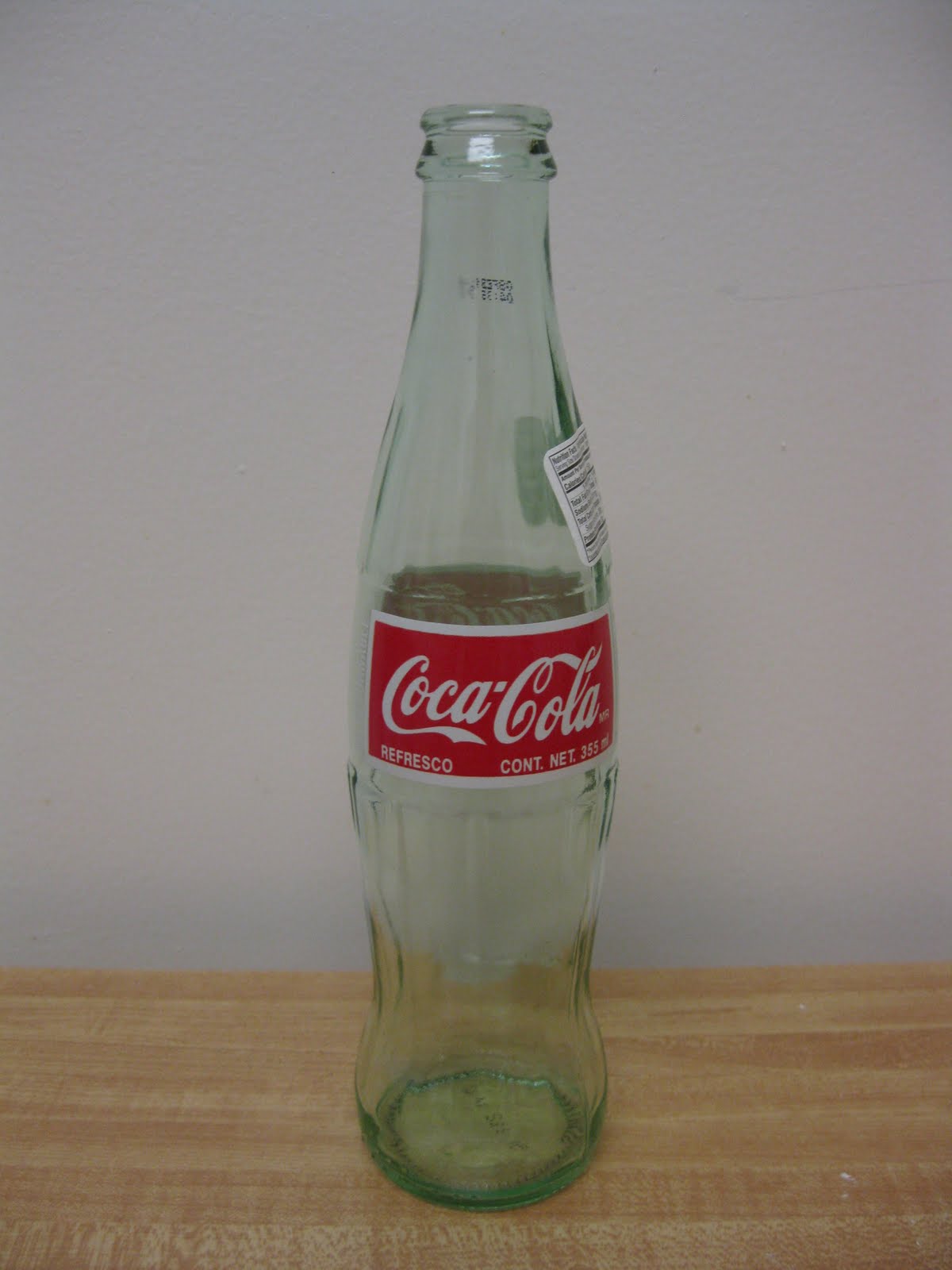
Check out the GLASS BOTTLE! Just based on the packaging, it was awesome.
Like Kosher Coke, Mexican Coke is made with real sugar. (Can you see it?! It's on the bumped-out part of the label.)

It didn't have the weird aftertaste that regular Coke has (it's not as pronounced as in the diet version, but I definitely get a weird lingering taste when I drink the regular kind). Oh, and did I mention the glass bottle??
I assume that Taqueria Poblano must sell Mexican Coke all the time, so I know where I will be heading next time I get a hankering for a soda!
May 13, 2011
On the Table: Delicious Cheddar (and Pasta)
Sorry folks, apparently Blogger has been having some problems for the past few days :( I wrote a post yesterday but it did not actually get posted...so I am going to attempt to re-create it now!
Although I am usually hesitant to discuss specific products (I am really a pragmatist in the kitchen, and I firmly believe in working with what you have on hand...if your preference is for products that are organic, free-range, etc., then by all means use those, but rarely would I say they are required), I have a current culinary love that is, well, a specific product. It is this cheese:


 Yum!
Yum!
Although I am usually hesitant to discuss specific products (I am really a pragmatist in the kitchen, and I firmly believe in working with what you have on hand...if your preference is for products that are organic, free-range, etc., then by all means use those, but rarely would I say they are required), I have a current culinary love that is, well, a specific product. It is this cheese:


It is delicious! And the label does not lie - it is SMOKEY cheddar! Smokey like sitting next to a campfire - I love it! Admittedly, the smokey flavor was a little overwhelming at first, so I could only eat it in little bites. Over the course of a few days, however (and I'm not sure whether my taste buds adapted or the cheese actually mellowed), I couldn't get enough!
I found this cheese at the farmer's market. Raw milk cheese is somewhat controversial (because it is made from unpasteurized milk) and can be hard to find. This producer has a plain cheddar that I am definitely planning to try next time I make it over to the farmer's market. If you are interested in learning more about raw milk cheese, you should check out the Raw Milk Cheesemakers' Association.
After I had eaten the cheese plain and on crackers, I decided to try cooking with it, which turned out fabulously! I just sauteed about four ounces of sliced mushrooms, added in half a pound of frozen peas, a few tablespoons of milk, and about half a cup of the cheese (finely diced), and cooked, stirring often, until all the ingredients were heated through and the cheese had melted. I tossed it with cooked pasta, using just a bit of the pasta water to thin out the sauce, and added in some parmesan cheese.

May 3, 2011
Not on the Table Yet, but Soon: Fresh Herbs are the Best!
Hooray, the farmer's market is back in Crystal City! I was incredibly excited to stop by this afternoon. There were lots of familiar faces among the purveyors, along with some newcomers. Flowers and herbs seemed to be the order of the day, as they dominated the market. I picked up two plants (and then got to take a trip to Home Depot to pick up planters and potting soil!).
Here is the mint:

And here is the lavender:

It is fantastic to have something green livening up the apartment! I will most definitely be using the mint in my upcoming culinary adventures, and I will need to do some research as to how lavender can be used in cooking...in the meantime, it will look pretty and smell good!
Here is the mint:

And here is the lavender:

It is fantastic to have something green livening up the apartment! I will most definitely be using the mint in my upcoming culinary adventures, and I will need to do some research as to how lavender can be used in cooking...in the meantime, it will look pretty and smell good!
May 1, 2011
Food for a Good Cause
I volunteered earlier today at the FRESHFARM Market in Dupont Circle, helping to sign people up for the Celebrated Chefs program. Celebrated Chefs is a company that helps nonprofits (in this case, FRESHFARM Markets) raise money when participants dine out at participating restaurants. Here is how it works. You enroll a credit card you already have (you can enroll multiple cards under your account, if you want) and affiliate your account with a particular nonprofit, and whenever you use the enrolled credit card to dine at one of the participating restaurants, 5% of your bill is automatically donated to the selected nonprofit. There is no cost to join, and no obligation once you have joined. Plus, you get a free cookbook when you enroll! The whole restaurant connection seemed particularly fitting for FRESHFARM Markets (especially since a number of the participating restaurants already support the Market by purchasing food through it), but there are lots and lots of other nonprofits you can choose to support.
If you are interested in learning more about Celebrated Chefs (they current operate in DC, Seattle, San Francisco, and Chicago), you can check out their website: https://www.celebratedchefs.com/home.aspx
Unfortunately, if you enroll through the website, you have to pay shipping on the cookbook, but if you enroll directly through the nonprofit (for example, at an event such as the farmer's market) you can take it with you on the spot.
Also, if you work for a restaurant or nonprofit that would be interested in participating, it would be worth dropping them a line!
If you are interested in learning more about Celebrated Chefs (they current operate in DC, Seattle, San Francisco, and Chicago), you can check out their website: https://www.celebratedchefs.com/home.aspx
Unfortunately, if you enroll through the website, you have to pay shipping on the cookbook, but if you enroll directly through the nonprofit (for example, at an event such as the farmer's market) you can take it with you on the spot.
Also, if you work for a restaurant or nonprofit that would be interested in participating, it would be worth dropping them a line!
April 28, 2011
Coupons - At What Cost?
I came across the show Extreme Couponing last night, and I have to say that I got pretty sucked into it. At first, I was fascinated. Then I was horrified. I will be the first to admit that I love coupons (though not nearly as much as the people on the show). However, I try to make sure that I only use coupons to buy things that I would have bought anyway, or that I have been wanting to try. And I buy one or two of the product, not forty. The people featured on the show, however, have some pretty crazy couponing skills, and make a serious effort to buy hundreds of dollars of groceries for close to nothing. They build stockpiles. Their organizational skills and their patience are pretty incredible. The fairly extended check-out scenes, however, are what led to my horror. Pallets of toothpaste, cases of soda, and piles of canned goods came down the conveyor belts. But there was not a single fresh fruit or vegetable in sight.
I would absolutely not claim that I shun canned and boxed foods, though I do think they need to be accompanied by a hearty supply of fresh foods (or frozen - frozen vegetables are definitely a staple in my kitchen). I mean, if you are building stockpiles of food that could last for years, wouldn't you wonder what is in the food that allows it to last for years?
I also had to wonder how much money they were really saving. Some of them spent thousands of dollars each year on newspapers, and printing coupons off the internet can't be cheap, considering the cost of ink. I realize they may relish the thrill of saving, but if your food budget is just a few dollars and your newspaper budget is thousands of dollars - doesn't that seem a bit backwards?
Here is what really got me, however: the people featured last night claimed to spend between 30 and 60 hours "couponing" each week. With that much time, you could pretty easily grow a garden, which would produce lots of food for just the cost of seeds and some gardening supplies. Plus, you would have tons of time left to cook from scratch, can your own fruits and vegetables, etc.
I have a brilliant idea for a reality show mashup. I think Jamie Oliver should bring his Food Revolution to Extreme Couponing.
I would absolutely not claim that I shun canned and boxed foods, though I do think they need to be accompanied by a hearty supply of fresh foods (or frozen - frozen vegetables are definitely a staple in my kitchen). I mean, if you are building stockpiles of food that could last for years, wouldn't you wonder what is in the food that allows it to last for years?
I also had to wonder how much money they were really saving. Some of them spent thousands of dollars each year on newspapers, and printing coupons off the internet can't be cheap, considering the cost of ink. I realize they may relish the thrill of saving, but if your food budget is just a few dollars and your newspaper budget is thousands of dollars - doesn't that seem a bit backwards?
Here is what really got me, however: the people featured last night claimed to spend between 30 and 60 hours "couponing" each week. With that much time, you could pretty easily grow a garden, which would produce lots of food for just the cost of seeds and some gardening supplies. Plus, you would have tons of time left to cook from scratch, can your own fruits and vegetables, etc.
I have a brilliant idea for a reality show mashup. I think Jamie Oliver should bring his Food Revolution to Extreme Couponing.
April 19, 2011
Find a Farmer's Market Near You!
My favorite time of year is almost here - farmer's market time! Even though there are a limited number of markets that are open year-round, most of them start opening around this time of year. Plus, the variety of produce abounds beginning in the spring. My preference is always to buy produce (and sometimes meat and bread) at the farmer's market, rather than the grocery store. By choosing the farmer's market, you are not only supporting local farmers, but you also know the produce is fresher (it can be picked when it is actually ripe, rather than being picked and artificially ripened so it looks good by the time it gets to the grocery store), and if you have any questions (about pesticide use, genetically modified products, growth hormones, etc.), you can ask!
Though I do not use one (yet!), a Community Supported Agriculture (CSA) program is another great option for purchasing local produce. When you enroll in a CSA, you pay a set fee and receive periodic (often weekly) deliveries of whatever produce is ripe at that time.
Here are some resources for finding a farmer's market or CSA near you!:
http://www.localharvest.org/
http://apps.ams.usda.gov/FarmersMarkets/
The following two farmer's market networks operate specifically in the DC metro area:
http://www.freshfarmmarket.org/index.html
http://smartmarkets.org/
Though I do not use one (yet!), a Community Supported Agriculture (CSA) program is another great option for purchasing local produce. When you enroll in a CSA, you pay a set fee and receive periodic (often weekly) deliveries of whatever produce is ripe at that time.
Here are some resources for finding a farmer's market or CSA near you!:
http://www.localharvest.org/
http://apps.ams.usda.gov/FarmersMarkets/
The following two farmer's market networks operate specifically in the DC metro area:
http://www.freshfarmmarket.org/index.html
http://smartmarkets.org/
March 25, 2011
Movies to Engage: Truck Farm and PLANEAT
Last night, the Environmental Film Festival hosted the DC premiere of the film Truck Farm and the US premiere of the film PLANEAT.
Truck Farm documents the development of, literally, a garden in the back of a pickup truck. The film also features a variety of urban gardens around New York City, including a rooftop farm, a community garden, a garden on a barge, and a window farm (and no, that is not just some flower pots on a windowsill - you can learn more about it here). The storytelling is fantastic, and the movie was really a joy to watch. The film is narrated in song and features some great animation that looks like it was cut from a Trader Joe's circular.
In a discussion after the screening, the filmmakers indicated that there are now 25 truck farms in 25 cities; one is being developed in DC by the DC Central Kitchen. So you might see one in your neighborhood! If you have an opportunity to see the film, I would highly recommend it. You can learn more about the truck farm here and see about screenings here.
PLANEAT examines the virtues of a plant-based diet from both health and environmental perspectives. The film prominently features research from Professor Emeritus T. Colin Campbell (from Cornell!) regarding the the impact of diet on health, and specifically the link between a plant-based diet and reduced risk of cancer. Also highlighted is a treatment program developed by Dr. Caldwell Esselstyn Jr., in which a shift to a plant-based diet is purported to cure heart disease. From an environmental perspective, Professor Gidon Eshel from Bard College discusses the impacts of various diets (notably a Western diet of plants/meats/dairy and a plant-based diet) on the environment, particularly related to greenhouse gas emissions and reactive nitrogen creating dead zones in oceans, as well as the most efficient diet in terms of converting land area to calories.
The story is told in a more traditional documentary style, and is composed mainly of a series of interviews (no songs here, unfortunately). However, interspersed with the academic research are interviews with a number of chefs in which the chefs prepare delicious-looking vegan dishes (I left the theatre pretty hungry). I am not sure I am going to go vegan at this point, but the film is a fantastic reminder to eat more plants, and particularly more whole foods. If you are interested in diet from a health perspective or an environmental one, the film is definitely worth seeing (and especially if you are concerned about cancer or heart disease). You can learn more about the film here.
If you want to see the film, PLANEAT is one of six films that will be presented in an upcoming film festival that Whole Foods Market has organized in seventy cities (the other movies look really interesting as well). You can find information about that film festival here and see about screenings near you here (sadly, that film festival is not free).
The T. Colin Campbell Foundation also provides a wealth of information about a plant-based diet, and their website is here.
Oh, and one last thing. ARKive is one of the sponsors of the Environmental Film Festival, and their website is AWESOME. The website provides information about endangered species and features both an encyclopedic amount of information and some absolutely stunning photography and videography. The website is definitely worth checking out - you can find it here.
Truck Farm documents the development of, literally, a garden in the back of a pickup truck. The film also features a variety of urban gardens around New York City, including a rooftop farm, a community garden, a garden on a barge, and a window farm (and no, that is not just some flower pots on a windowsill - you can learn more about it here). The storytelling is fantastic, and the movie was really a joy to watch. The film is narrated in song and features some great animation that looks like it was cut from a Trader Joe's circular.
In a discussion after the screening, the filmmakers indicated that there are now 25 truck farms in 25 cities; one is being developed in DC by the DC Central Kitchen. So you might see one in your neighborhood! If you have an opportunity to see the film, I would highly recommend it. You can learn more about the truck farm here and see about screenings here.
PLANEAT examines the virtues of a plant-based diet from both health and environmental perspectives. The film prominently features research from Professor Emeritus T. Colin Campbell (from Cornell!) regarding the the impact of diet on health, and specifically the link between a plant-based diet and reduced risk of cancer. Also highlighted is a treatment program developed by Dr. Caldwell Esselstyn Jr., in which a shift to a plant-based diet is purported to cure heart disease. From an environmental perspective, Professor Gidon Eshel from Bard College discusses the impacts of various diets (notably a Western diet of plants/meats/dairy and a plant-based diet) on the environment, particularly related to greenhouse gas emissions and reactive nitrogen creating dead zones in oceans, as well as the most efficient diet in terms of converting land area to calories.
The story is told in a more traditional documentary style, and is composed mainly of a series of interviews (no songs here, unfortunately). However, interspersed with the academic research are interviews with a number of chefs in which the chefs prepare delicious-looking vegan dishes (I left the theatre pretty hungry). I am not sure I am going to go vegan at this point, but the film is a fantastic reminder to eat more plants, and particularly more whole foods. If you are interested in diet from a health perspective or an environmental one, the film is definitely worth seeing (and especially if you are concerned about cancer or heart disease). You can learn more about the film here.
If you want to see the film, PLANEAT is one of six films that will be presented in an upcoming film festival that Whole Foods Market has organized in seventy cities (the other movies look really interesting as well). You can find information about that film festival here and see about screenings near you here (sadly, that film festival is not free).
The T. Colin Campbell Foundation also provides a wealth of information about a plant-based diet, and their website is here.
Oh, and one last thing. ARKive is one of the sponsors of the Environmental Film Festival, and their website is AWESOME. The website provides information about endangered species and features both an encyclopedic amount of information and some absolutely stunning photography and videography. The website is definitely worth checking out - you can find it here.
March 18, 2011
Hidden (Crown) Jewel?
I have been doing a little research into the Serbian Crown restaurant out in Great Falls, and I am not sure how this restaurant has not jumped to the top of some unspoken DC foodie must-visit list. (Full disclosure: I have not actually been to this restaurant. But I plan to visit!) Specifically, I am flummoxed that people have not jumped on the wild game portion of their menu. With offering such as emu, antelope, wild boar, and LION, I would think more people would visit just to try those dishes (or maybe everybody doesn't go out of their way to try unusual foods?). Aside from these more far-out dishes, their menu includes an extensive assortment of Russian and French offerings. Apparently they take their vodka and their entertainment (they have a piano bar! and sing-alongs! and dancing!) very seriously. Reviews of their service are mixed, from what I have read (but really, that seems to be the case with almost all restaurants on user review sites, which is what I was using). At less than half an hour outside the city, I will be planning a trip soon!
Subscribe to:
Posts (Atom)